
|
As was illustrated by the high attendance at IIR’s recent Control Room Communications conference in London – and the wide ranging, enthusiastic debates that took place there – planners’ and managers’ minds are being concentrated by a diverse set of factors: technological, political and social. On one hand, there’s a growing drive in many countries around the world to economize by simplifying and consolidating their emergency service operations, infrastructures and control centres. In many regions, these have evolved organically over the years, reflecting the organizational and political realities of their time – but which are no longer so relevant in such an interconnected and cost-conscious time as now. That said, decisions made on financial or technical terms will inevitably have a political dimension if particular areas feel that they may lose out on the community-focused and relatively independent emergency organizations that have served them in the past. On the other – against that backdrop of financial stringency in an often politically and socially sensitive context – come a whole range of issues to do with technology change. For a start, the citizens themselves are now becoming interconnected and this will increasingly affect the public safety environment in numerous ways. Technology changesMany local and national governments around the world are now opening up their systems and using the Internet to share information with the community – such as the geographic distribution of crimes in their areas. Citizens are far less passive than they used to be in expecting value for their taxes and, as part of the general ‘consumerization’ of society, are going to be much more active in monitoring and challenging the quality of service that they get from their local government and public services. Meanwhile, flowing in the other direction, cheap but powerful hardware in the form of CCTV systems, camera-equipped smartphones and digital homes running security and environmental monitoring systems will be adding to the flow of information and potential evidence flowing into the control centre. In the emergency service environment itself, numerous technology changes are afoot – the shift towards broadband, IP-based communication being only one. For example, the emergence of cloud-based communications and applications services, already popular in the enterprise sector as a strategic, cost-saving solution, also has a potential in this environment – as long as the appropriate levels of reliability and integrity can be delivered. Open approachesFor Euros Evans, chief technical officer at Airwave, the UK’s national TETRA-based public safety communications service provider, we’re currently embarking on a journey of major change in the way things are done at numerous levels: “Just like other sectors, we’re moving from a world where hardware and software are closely tied together – often in proprietary ways – to one that’s far more open and cloud approaches will have a role to play, though ‘clouds’ obviously mean different things to different people. “If we step back for a moment and look at what exactly we’re trying to achieve for our emergency services and our communities, it’s already clear that while overall bandwidth is increasing we have to do much more to turn that data into appropriate and useful information to help support complex decision-making.” Evans and some others in the industry believe that this is similar in many ways to what the mainstream telecommunications sector has had to do with its own back-office OSS/BSS systems in recent years – those IT systems that turn a network into a hopefully functional business. There, valuable information was often trapped in separate system silos that had grown up over the years and the costs for integrating new systems and or introducing new processes could be crippling. Mergers, acquisitions, the roll-out of new services such as video, often relying on third parties and new devices to ever-more demanding customers, and an explosion in the amount of data to be managed in real time challenged the status quo – just at a time when both operational and equipment budgets were being cut. On top of that, the ‘first responders’ – the expensive repair and maintenance technicians out in the field – were being confronted by far more complex problems than ever before that had to be resolved in ever-shorter timeframes. All in all, it was a fragmented and almost craft-based systems environment – rather than one that was truly automated with clearly defined workflows. In this setting, a huge amount of time and energy has been spent by organizations such as the TM Forum in defining and standardizing terminology, processes and workflows to help vendors and operators streamline and integrate their operations, introduce new software frameworks and eliminate unnecessary baggage and costs.
|
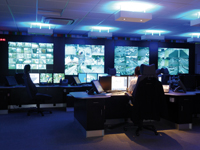 Mission-critical control centres around the world are facing an increasingly broad set of challenges to their traditional ways of working, finds Alun Lewis